PENCIL PRACTICE · BEGINNER GUIDE
Drawing character tutorial: create a simple full-body explorer
This drawing character tutorial develops a friendly explorer from a gesture line and a few body masses. Decide what the character is doing before adding the costume. A relaxed standing pose makes it easier to compare the shoulders, hips and feet. You will keep the body stylised, build a readable silhouette, and add a jacket and backpack after the balance works.
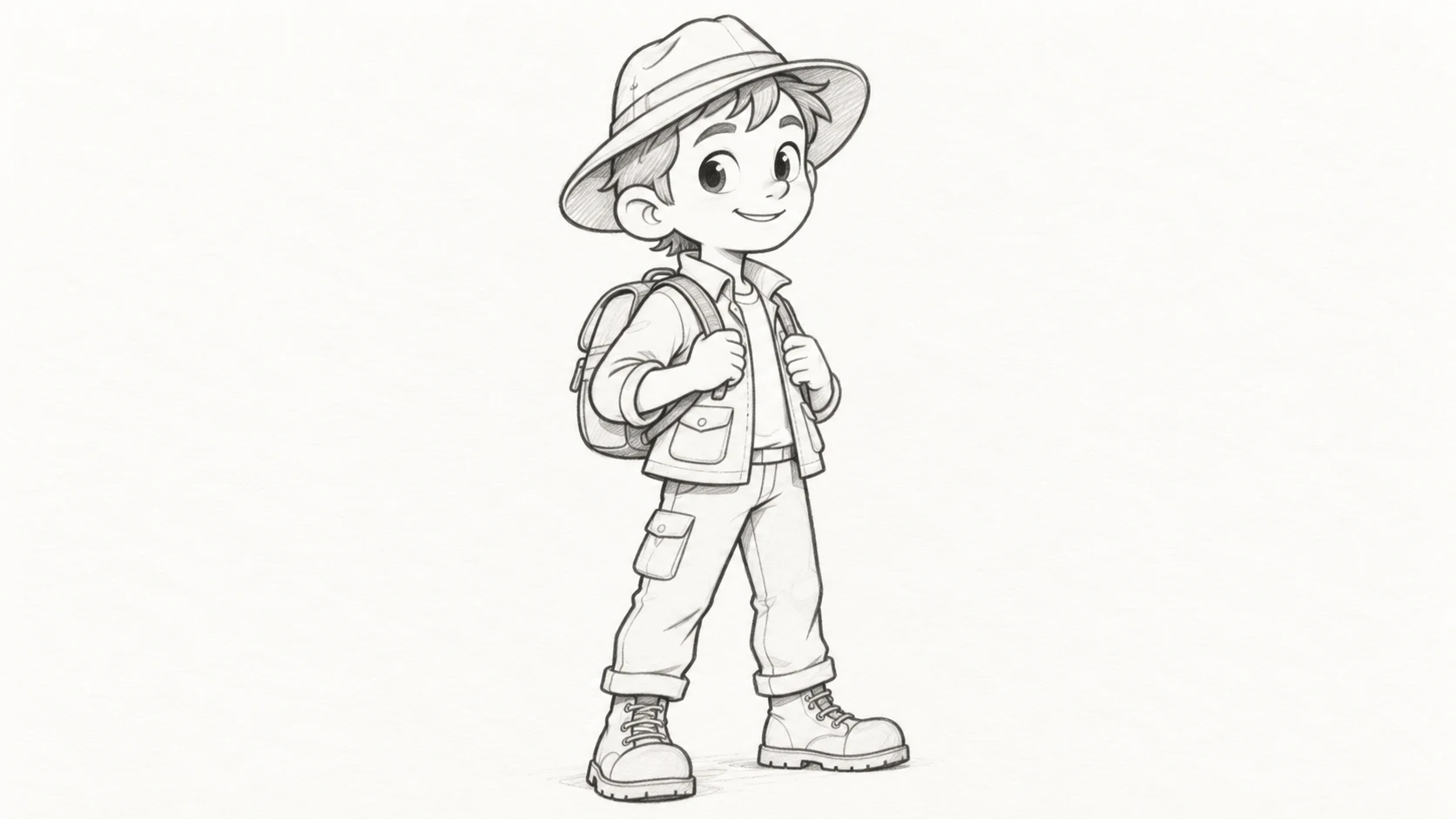
What you need and how to begin
Use an HB pencil and eraser, or a digital sketch layer. Keep a second small area free for a silhouette thumbnail. A simple standing reference can help with balance, but the character and clothing can be your own. No specialised software is required.
Choose one short character idea, such as a curious walker carrying supplies. Limit the first costume to a jacket, trousers, boots and a small bag. More accessories can obscure a pose that is still being adjusted. The reference hat is optional.
Drawing character tutorial — step by step
STEP 1 / 6
Choose the gesture and ground
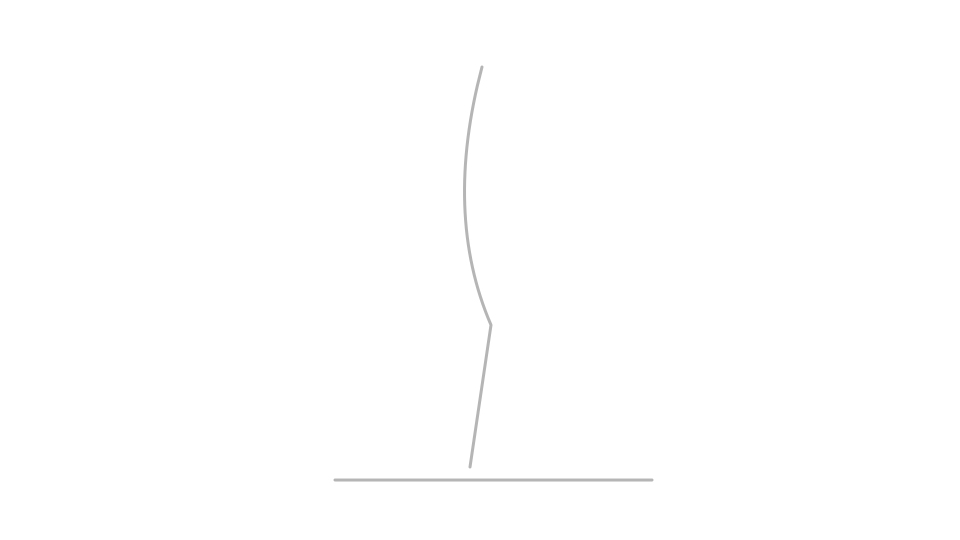
Black: earlier lines. Red: this step. Gray: temporary construction guides. Draw a light line from the head area through the torso toward the supporting leg. Add a short ground guide beneath the feet. Keep the gesture relaxed rather than making the body perfectly straight. Mark the top and bottom of the full character so later details do not push the boots off the page.
Check your drawing: The feet need enough room below the body masses.
STEP 2 / 6
Block the head, ribs and pelvis
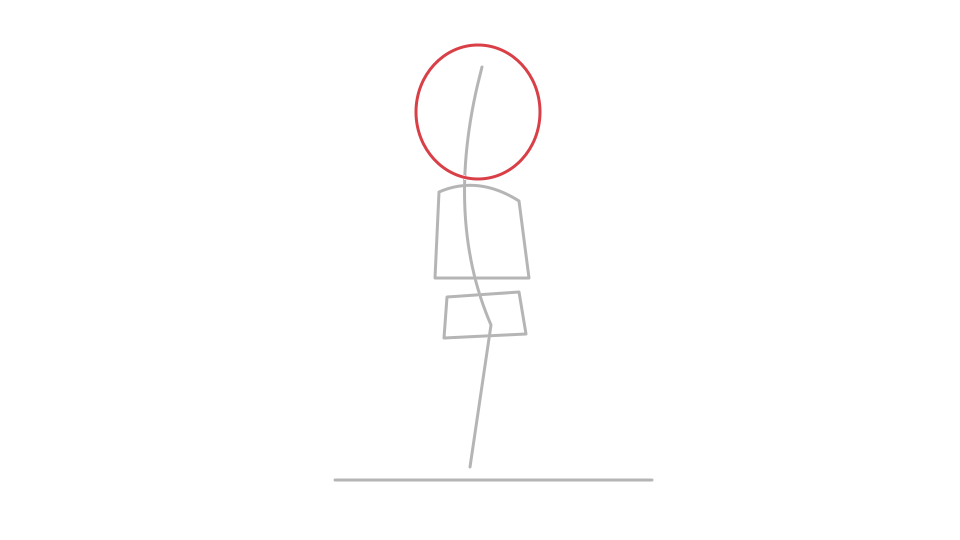
Black: earlier lines. Red: this step. Gray: temporary construction guides. Place a rounded head, a simple ribcage mass and a smaller pelvis along the gesture. Turn the torso slightly to show a front and side. Choose larger-than-life head proportions for this cartoon example. Keep the pelvis below the ribcage rather than joining both into one long rectangle.
Check your drawing: The torso and pelvis should leave space for the waist connection.
STEP 3 / 6
Connect limbs and test balance
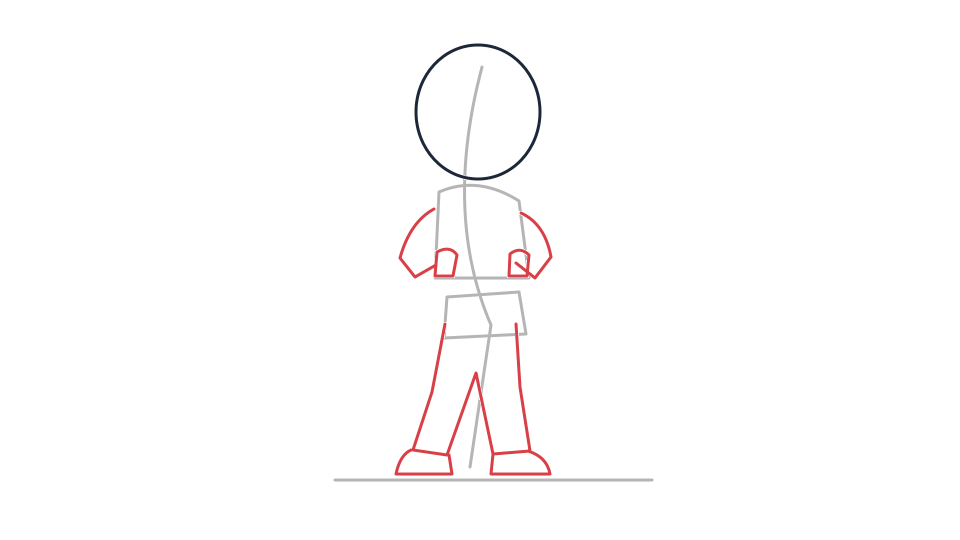
Black: earlier lines. Red: this step. Gray: temporary construction guides. Sketch limbs as tapered tubes and mark elbows and knees. Put the boots on the ground guide, with one foot slightly farther back if the pose turns. Add simple mitten shapes for hands near the backpack straps. Check the body weight before adding sleeves or pockets.
Check your drawing: Imagine the weight falling toward the supporting foot rather than outside both feet.
STEP 4 / 6
Dress the body with large clothing shapes
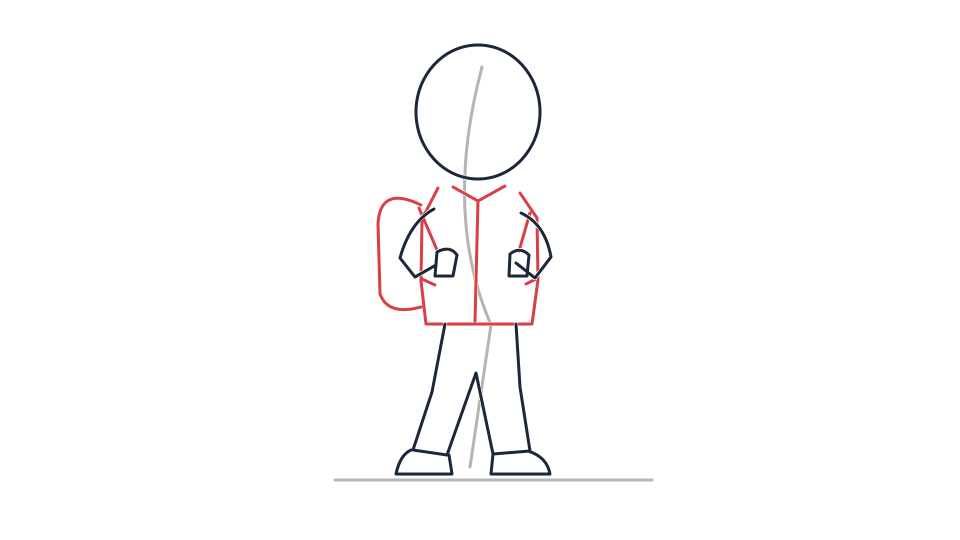
Black: earlier lines. Red: this step. Gray: temporary construction guides. Build a jacket around the ribcage, leaving a little room between cloth and body. Shape trouser legs around the limb guides and add boot soles. Place the backpack behind one shoulder, with straps passing in front. Erase body lines hidden by clothing so overlapping forms stay readable.
Check your drawing: Sleeves and trousers should wrap the limbs rather than cut through them.
STEP 5 / 6
Add expression and a few costume cues
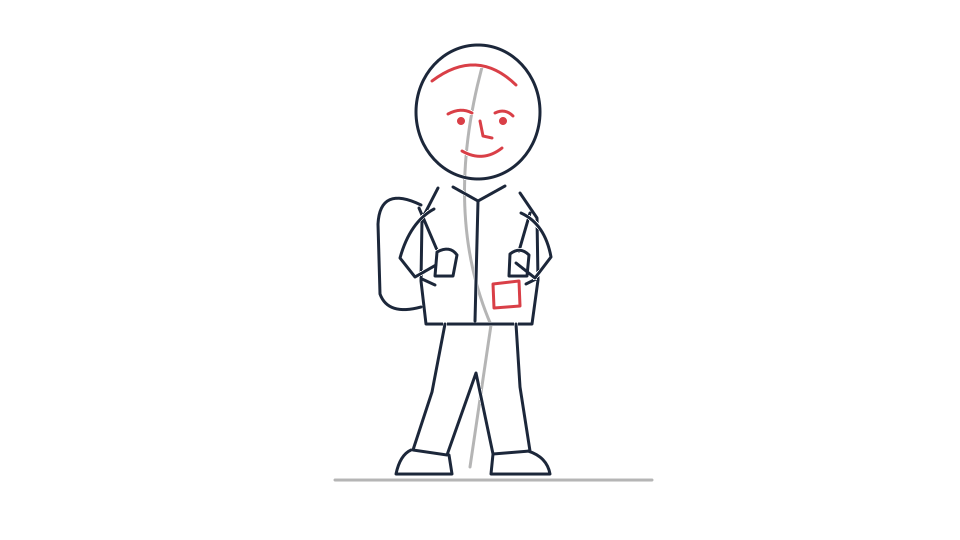
Black: earlier lines. Red: this step. Gray: temporary construction guides. Place a facial centreline around the turned head, then add simple eyes, eyebrows and a smile. Keep the far side of the face narrower in this three-quarter view. Add the jacket opening, a pocket and one or two seams. Let those details reinforce the explorer idea without covering the silhouette.
Check your drawing: Eye direction should agree with the turn of the head.
STEP 6 / 6
Simplify and finish the silhouette
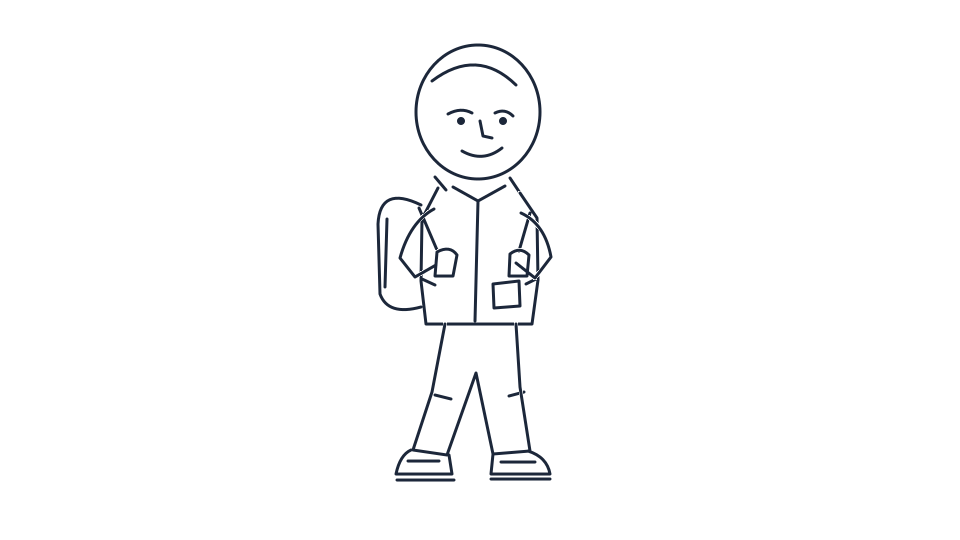
Finished practice line drawing; construction guides are removed. Remove unused gesture and joint marks. Darken a few important overlaps: chin over collar, sleeves over hands, trousers over boots. In a small thumbnail beside the drawing, fill the body as one shape and check whether arms and feet remain distinguishable. Adjust tight tangencies before polishing details.
Check your drawing: The pose should be readable before the viewer notices the pockets.
Common problems and small corrections
The character tips over
Move a foot or adjust the torso over the support area. Adding a ground shadow will not fix an unbalanced body.
The costume hides the pose
Remove a pouch or shorten a sleeve edge where two forms merge. A small white gap can separate an arm from the torso.
Questions about this drawing exercise
Do I need realistic anatomy first?
You can begin with stylised forms, but still check joints, balance and how limbs connect. Simplification does not remove the need for structure.
Can I change the costume?
Yes. Keep the underlying pose and change one garment at a time so you can see whether the silhouette still works.
How should I draw the hands?
Block a palm and thumb first. For this small cartoon, fingers can be grouped instead of rendered as many narrow separate shapes.
Try a second sketch
Repeat the drawing character tutorial with the same explorer looking the other way. Keep the jacket and bag simple. Compare the two silhouettes before designing a second costume; this helps you practise a consistent character rather than only a single finished picture.